Tuesday, August 1, 2017

Hidden Horror -- The Beaver

Some movies defy genre--others deliberately misrepresent themselves in order to appeal to a broad audience, only for the observant viewer to recognize them as dark, terrifying journeys into the human condition. I'd like to introduce you to one of the most unique horror films hiding in your Netflix selection, The Beaver.

Let me take you back to 2011, where Academy darling Jodie Foster and universally-beloved auteur Mel Gibson came together to produce a hilarious look at depression from a delightfully original angle that delivers a message just about anyone can relate to: when you hit rock bottom, sometimes the only thing to bring you back is the magic hiding inside your own diseased mind.


There are many incorrect statements in that last sentence.

How can I begin to describe The Beaver? Start with the atmosphere of What Women Want (troubling behavior played off as adorable comedy), plus Little Miss Sunshine quirk (look at this charming broken family!). Sprinkle in some light humor and some harsh truths, but apply both generously so that they barely compliment one another. Bake at 475 under Jodie Foster's unsettling gaze for 90 minutes, and you get something close to The Beaver. But be careful biting in...there's a secret filling inside.

It's very telling that the last exchange in that jolly little lie of a trailer is Gibson asking Foster, "Where do we start?" and she replies, "We start with the good part." Jodie has clearly learned a thing or two about marketing your passion project in Hollywood: fill the trailers with your fun elevator pitch and inject every frame with that fresh-from-Sundance feel, and you've got yourself the indie darling of the year. Very good, Clarice. So, let's do that--start with the good part.

The good part is that no matter how you feel about Mel Gibson, as far as acting goes, this is his best work in years. Granted, a good portion of that is owed to his ability to project a vaguely drunken Michael Caine impression through an eerily expressive beaver puppet, but still--if you can somehow break your gaze from the cold dead stare of those button eyes, you'll see the actor is still very much alive back there. And to the film's credit, that is clearly its ultimate purpose: to remind us all that Mel Gibson is still a shining talent despite being also being a racist lunatic. (Supposedly, production on the film began before the troubles, but was pushed back from release directly because of Gibson's ruined reputation.) The whole cast is solid, and includes Jennifer Lawrence and the late Anton Yelchin as the moody teen lovers a few years before their respective franchises took off.

Jodie Foster is pulling double time as director and actor, and she is predictably competent at both. I am not exactly a fan of her directing style--she has a taste for awkward moments that I (a lover of awkward moments) can't bear to sit through. But for every sour note she holds on for too long, there are many lovely scenes throughout her films that coax you back in until the next big cringe. A moment in The Beaver that sticks out to me is when Anton Yelchin catches a glance of Jennifer Lawrence between classes, looking positively dreamy in her pretty summer dress, beachy blonde curls swept to the side--moments later he receives a text from her, a triple-chin selfie with her tongue hanging out. It's only a few seconds and it's quickly lost within a montage of other cutesy scenes, but it's a charming moment that subtly communicates a great deal about Lawrence's character and their relationship.


That's just what we love about you, Jen.

Now, to address the beaver in the room. I would like to commend this film for being as sensitive as possible to the issues it addresses, taking the time to properly explain and define exactly what is being portrayed. There are many scenes depicting depression that feel experienced and honest, a lived-in kind of devastation that's palpable onscreen. The puppet therapy thread is somewhat less authentic, taking on more of a My Strange Addiction vibe than a legitimate (albeit rarely used) medical practice. Despite its flaws and the odd creative license here and there, they clearly did some research, and I have to give them props for that.

So...that's the good part. I wanted you to know that before we dive in. I want you to get marinated in that offbeat dramady flavor so we have some solid ground to start from. I want you to get the feeling I experienced going in, and that feeling is smug. I thought I knew what this movie was. I remember the buzz, all the snarky jokes we made at that cutesy trailer. We were all vaguely curious, but in the end no one saw it (maybe one of the copies Jodie had personally mailed out to members of the Academy got a watch, out of politeness), and it has become one of the few Gibson exploits we have collectively chosen to forget.

Years later, I was still smirking as I put on the movie for the first time. I was assured that I understood the way films work and what to expect from a movie involving whimsical alternative therapy. Well, just hang on, friends. I haven't even gotten to the synopsis yet, and I do mean the real synopsis, not the sweet morsels the trailer or some pedestrian critic's 2011 review will feed you. Nope, you're getting the whole plate.

Walter has a nasty case of rich white man depression. He runs a toy company that's on the rocks, he barely knows his kids, and his marriage is strained seemingly beyond repair. Not much is said on whether this is a result of the depression or the cause of it, but all are clearly deteriorating under Walter's mournful thousand yard stare. After being unceremoniously kicked out of the house, he stops at a liquor store on his way to a motel, where he discovers a beaver puppet in the garbage. The night involves a few clumsy attempts at suicide before Walter hears the puppet speak to him, channeling a grumbling Cockney life coach that motivates him to piece his life back together.


What a fun way to work through your devastating mental illness.

Walter returns to his home mere hours after being ejected from it, speaking through the puppet and bearing a stack of informative index cards stating that the puppet is a prescribed therapy tool and that any communication should be addressed to the beaver. His family's reaction is decidedly mixed--his younger son is enchanted while his eldest is repulsed, and his wife waffles somewhere in between. Meanwhile, Walter's co-workers are instantly accepting of and delighted by the beaver. The business is booming on Walter's idea for a beaver-themed tool kit, which somehow becomes a hot-selling item due to the sensationalism of the company's CEO speaking through a puppet. (And, I don't know, kids like building things? And beavers? Sure.)

Walter's life is making a dramatic turnaround with the beaver's help, but soon it becomes clear that he is having trouble disengaging from the beaver's personality. It eventually comes out that the puppet was never prescribed by any doctor and that Walter sort of came up with this method on his own. Despite lying to everyone and essentially using the puppet as a way to "switch off" for a few months, the beaver isn't wrong when he says that his methods are working. Oh, and there's a whole subplot about how Anton Yelchin hates his dad but loves Jennifer Lawrence, and she's this troubled popular girl/secret graffiti artist whose brother died. It barely matters.

Now at this point, I'm sure you're really starting to wonder where I'm going with all this. You're thinking this sounds like typical film festival fluff, a sugary vanity project hoping to mend an admittedly talented maniac's lingering popularity. This isn't horror, not even close. There is no way this quirky family drama could suddenly veer into violent unhinged insanity.


This guy wouldn't just go off on you like that.

Perhaps you best turn back now, keep your impressions of this silly little movie as they are and carry on living your life. Then maybe, one slow Sunday afternoon, you'll forget my words of caution and find the movie on Netflix, and out of bored curiosity you'll put it on. Then you can experience for yourself the profound horror of watching that innocence of yours shatter into screaming little pieces by the time the end credits roll.

There are signs fairly early on that something is amiss within the film. Walter's downward spiral happens in the first few minutes, perhaps to prepare us for the rough road up ahead. But we've all seen our share of funny suicide attempts in offbeat movies before--this is rock bottom, the darkest hour, nowhere to go but up. Surely, we will all learn something from this experience. We meet the beaver and things begin to improve. Work is great, home is great...it is a little weird that he keeps the puppet on during sex, but the music in the montage is telling us that all of this is going just swell.

But then, at about the midway point of the film, there is a scene in which Walter and his wife go out to dinner, and she requests that, just for tonight, he take off the puppet. It does not go well.


The dark underbelly of Walter's recuperation is quickly swept away as a standard mid-movie montage of sadness rolls by, but you sit there not absorbing it. You're haunted by what you've just seen, downright chilled. Things got real there for a second. All the whimsy got sucked out of the room and replaced with inexplicable dread. You can't just go back to caring about Anton Yelchin's girl troubles. There are dark clouds up ahead.

Walter eventually realizes that the beaver has become its own independent personality, and it has no intention of ending their therapy. The beaver considers him a lost cause and plans to completely take over his body like a parasite consuming the host. Walter finally wakes up and has a Tyler Durden moment, getting into a literal fistfight with himself. By the end, both man and puppet are bloodied and broken, but still breathing.

And then, dear friends, the moment comes when this movie reveals what it has been all along: a charmingly bizarre descent into utter madness.


He cuts off his arm.

He builds a tiny coffin measured to fit his arm, and then he fucking cuts it off.

In a movie where Jodie Foster weeps in a fancy restaurant and Chekov makes out with Katniss in front of a graffiti mural, a man banishes his alternate personality by hacking off one of his own limbs with a buzz saw. The film closes with a tender scene depicting Mel Gibson finally getting along with his son as a shiny new prosthetic lies across his lap, but you're likely too busy still screaming into your fist to notice because HE CUT OFF HIS FUCKING ARM!

If you're a normal person, you won't watch this movie, but supposing you do, you'll walk out of it saying, "Well it was a weird journey but I think he's really gonna turn his life around." But if you're like me--the horror fan--you'll come out gobsmacked and strangely delighted at having the rug pulled out from under you this way. Granted, it is slightly troubling that the ultimate message seems to be "Hey, maybe if you actually had something to be depressed about, you'd find more reasons to realize life isn't so bad," not to mention the implication that mental illness is as easily removed as a limb.


Thank goodness you took action before the infection could spread to your brain.

Nonetheless, it is hard to not be impressed how horror elements are placed disturbingly close to family-friendly sweetness. And I'm not just talking about a man who saws off his own arm in his goddamn garage sweet Jesus, but moreso the havoc depression can wreak on a good life from the inside out. These moments are sickeningly familiar for many people, and they're portrayed with dismal sincerity. Maybe you didn't have a panic attack in a public place, or punched yourself into submission, or began projecting a more charismatic personality in your daily life, but maybe you felt like doing it more than once, and that can be pretty frightening.

But don't let those tender truths distract you from the fact that this is a body horror film masquerading as a heartfelt comedy, in which a man is slowly consumed by a hostile spirit trapped in a puppet that wants to be human. It perfectly explains why Walter found the puppet in the trash, presumably dumped there by a former victim that managed to escape the beaver's seductive force before it was too late. Change the music and add some ominous shadows, and this easily becomes a horror film. As it is, it's another one of Jodie Foster's unsavory cringe-fests with a particularly bizarre edge. It does kind of make you rethink Home for the Holidays, although that movie hardly needs help being scary.


This movie is a nightmare for everyone in it.

You may feel you don't even need to watch the movie now that it's been thoroughly spoiled for you. Maybe this review was enough. Maybe it's enough just to know what happens in the final fifteen minutes of The Beaver. But should you find yourself faced with this innocent-sounding title during that kickback Sunday movie binge, remember my words of warning, and prepare yourself for a bizarre horror gem hiding under a cute poster in the comedy section.


Saturday, April 22, 2017

Remaking -- He's a MANIAC (1980), MANIAC (2012) on the floor

The horror community is abuzz right now over the upcoming release of IT, the glossy remake of the iconic 1990 miniseries. The full trailer dropped recently and depending on your feelings about the original film, you're either optimistic or deeply cynical towards what the new version will offer. Aside from some of the inherent flaws of modern blockbuster horror (gritty filters, jump scares, etc), I find the trailer to be promising and I'm genuinely looking forward to seeing the new film. But then, I'm usually open-minded when it comes to remakes. My peers in the community are less trusting of studios to redesign a classic, as they should be. We've been hurt before and we have every right to be bitter, but that doesn't necessarily mean that we should write off every makeover of something familiar. After all, if we can tolerate 400 different versions of Alice in Wonderland, surely we can be open to a new point of view on a single film.

That is why I have decided to start a new segment centered around this redheaded stepchild of a subgenre that is so near and dear to my heart: the horror remake. Welcome to Remaking, where we take a look at remakes, reboots, and reimaginings without getting really mad about it.

We can all agree that the best remakes go after material that isn't that well known or successful, films that were lacking in some way but still memorable and could use a second draft. John Carpenter's The Thing and David Cronenberg's The Fly are prime examples of this and are usually the first to reference when talking about beneficial remakes. Both directors took schlocky childhood favorites and brought them into the 80's with incredible special effects and gutting new pathos. They recognized that a relic of the atomic age could be reapplied to a new generation, old imagery being paralleled with modern fears.

Enter Maniac, possibly the most demonized slasher film of its time, and its perfect reapplication to the internet age.


Both films tell the same story. Frank is a lonely man who has a nasty habit of compulsively murdering women. He keeps mementos of them by taking their scalps and their clothes in order to decorate mannequins in their image. Over the course of the film, he builds a collection that begins to crowd his apartment with bloodied plastic ladies. He eventually meets a beautiful photographer and they start a seemingly sweet relationship. But Frank's demons continue to eat away at him as he whispers to his mannequins and suffers flashbacks from his traumatic childhood. We learn that Frank's mother was a neglectful prostitute and he is haunted by abuse from his broken home. The climaxes of the two films are different--both involve his girlfriend realizing what he is and all hell breaking loose--but it all ends with a mortally wounded Frank taking shelter in his apartment, only to watch his mannequins to come to screaming life and dismember him. The cops find Frank the next morning having succumbed to his wounds, his doll collection looking on in silence.

Don't let anyone tell you that either film is a fun watch. If Maniac were a carnival ride, it would be one that broke down years ago, boarded up and covered in "do not cross" signs. We, foolish thrill-seekers, hop the fence and get in the cart anyway, only to be slowly wheeled through a dark tunnel that we steadily realize isn't a ride at all but a tour through the cavernous home of a psychotic bum, and somehow he's been expecting us. The experience of watching the movie is much like taking the hand of a lunatic and letting him show you around his world. Try to smile politely when he introduces you to his girlfriends.


If there is one thing distinctive about the original Maniac that sets it apart from other grindhouse fare of its time is that it never loses focus off of Frank. A lesser film would spend more time getting to know the pretty ladies he's stalking, maybe check in at the police station for any hot leads, leaving time for only a few terrifying glimpses of our killer before the big showdown where the monster is finally vanquished. Maniac does not follow the rules, let alone narrative beats. The only outsiders we spend any amount of focus on happen to be victims of his stalking, seen through windows or looming just over their shoulder. What little we know about these doomed women is learned all while we're biting our nails waiting for Frank to strike. We don't get to see them as people with lives--only prey completely unaware that they're being hunted. We are in Frank's head, and that is where we must stay.

Sadly, this innovative point of view is precisely what sank the film. The only thing most critics took seriously about Maniac was its somber depiction of violence, adding it to an already substantial pile of slasher films to play scapegoat for all the modern world's problems, and dooming the film to a vile reputation even all these years later. (It always amuses me how critics have skewered just about every psycho killer movie as uncultured trash, yet still maintain that Halloween--the demon seed that arguably started this whole slasher craze--is untouchable, a masterpiece never to be rivaled in all the history of cinema.)

They failed to recognize that Frank is a far cry from other crazed villains seen before. He's not Norman Bates, with disarming good looks hiding a split personality. He's not Michael or Jason, bloodless immortal machines who kill without passion or reason. There are no pithy one-liners or philosophical musings or peals of evil laughter. Aside from Tom Savini's head getting blown off, there are no spectacular kills designed to titillate the audience. Compared to its flashy contemporaries, Maniac may be the most utterly joyless slasher film ever made.

Frank Zito is, in a word, conflicted. Yes, we see him slaughter and scalp women, but we also see the emotional turmoil he goes through in the aftermath. One of the first scenes in the original movie depicts Frank strangling a prostitute, only to instantly vomit and dissolve into sobs just after the light leaves her eyes. When we hear his inner thoughts, they are an untraceable blend of guilty conscience, crazed motivations, and somewhere in there, the remains of a man trying desperately to hold on to the last shreds of his humanity. He knows what he's doing is wrong and he hates himself for it, but he feels he has no choice. He's compelled, he's addicted.


His flavor of crazy stands out from the rest because he is so human. He has no distinct personality disorder we can prescribe, nor any single traumatic moment we can truly sympathize with, yet we do. There are many painful little moments in Frank's life that are almost too familiar--a gentle rejection from a love interest, a flippant comment from a stranger, a late night alone in an empty apartment. Perhaps that's why Maniac is such a hard watch: there's a moment, maybe several, that cause you to stop and say "I can relate to that." Maybe you didn't go and kill anybody over it, but Maniac suggests that none of us are as far away from it as we would like to be.

The 2012 remake took this "portrait of a serial killer" a step further by making the camera Frank's literal point of view. We as the audience become Frank, and for the next 90 minutes, we take on the everyday life of a demented killer. We see the twitches of pity and discomfort in other people's faces as they speak to Frank. We reel in confusion when terrible memories come to him. We see every moment of horror that he inflicts upon his victims, we experience every crazed outburst in the guilty aftermath, and we endure the company of his macabre housemates. We look in the mirror and we only see Frank. We are in his head, and that is where we must stay.

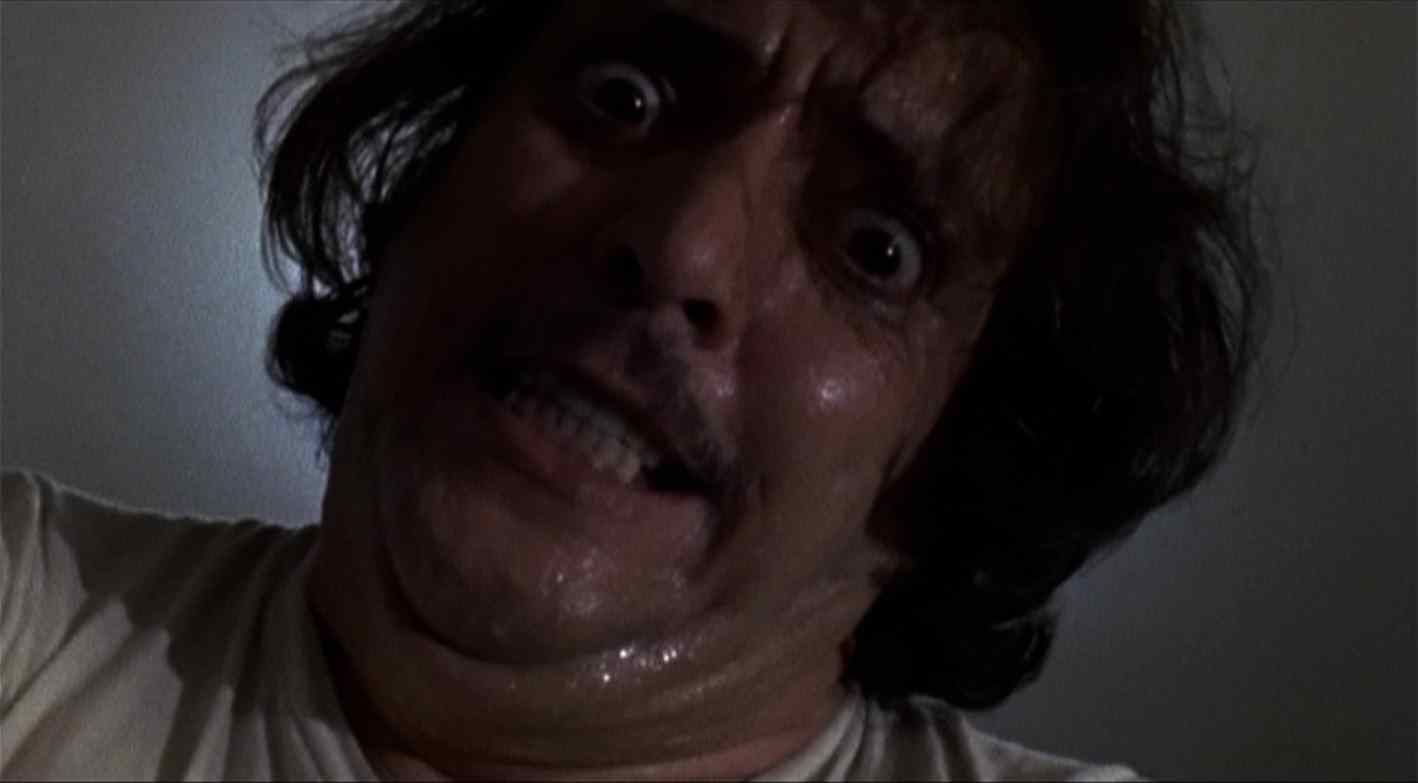
The most interesting difference between the films is in the physical appearances of the actors portraying Frank. The 1980 version's killer was a schlubby sweaty oaf, bulky with a weird face and haunted eyes, intimidating in every conceivable way. The kind of man any woman would be wary of passing on the street. The kind of man that causes the whole audience to point and say "Ooohhhh, that's him! There's the creep!" (No offense to the late great Joe Spinell. He's a fantastic actor and he cleans up just fine.)


Meanwhile in the 2012 version, we get a skinny nerd with an unsettling gaze. It reveals a lot about what has changed during the years between the films, how we have realized as a culture that our monsters do not always initially appear to be monstrous. And I'll just go ahead and get this off my chest: I've always found Elijah Wood to be a little creepy. I love the man, I like his work, he's a talented actor and seems like a perfectly nice guy. But there's always been something about him that seems...off.


Maybe it's those icy blue eyes of his--beautiful and chilling in their intensity--or maybe it's the way that sometimes his laugh sounds like the cackling of a perverted goblin. Yet at the same time, he's such a sweet-faced, slightly-built, soft-spoken man. He couldn't hurt a fly...or maybe that's just what he wants us to think. Somehow the 2012 version is more frightening for me because Elijah Wood is such an unassuming killer. This is the creeper of the new millennium. I've gone to school with that guy. Hell, I've dated that guy. That sweet babyface that hides something darker, that at any moment could go over the edge. Wood's Frank is that boy next door who seems a little weird but is probably harmless, but deep down you hope you never end up alone in a room with him.
 
To say Frank has issues with women would be putting it gently, and it is here that both films' most stunning set piece is put to brilliant use. Both films share the common element of mannequins bearing the bloody scalps of dead women posed around Frank's apartment. Grisly and beautiful, the mannequins are totems of Frank's sins and witnesses to his misery. They are his stand-ins for true companionship as well as his ultimate undoing.


Frank can't deal with living breathing women--to him, they only exist to torment: "Fancy girls, in their fancy dresses and lipstick, laughing and dancing...I know how it is with their hairs and their looks and they...they can drive a man crazy!" He tries instead to recreate them to suit his needs, taking the parts he likes and filling in the rest, stapling their essence to a plastic body he can pose to his liking. Still he knows they're no replacement, merely imitations of the creatures he so desperately pines for, yet can't connect with. He can't meet a woman or even DIY one without seeing them through his own broken lens, sticking himself in a cycle of longing and rejection that can only be quelled through violence.

Much like American Psycho, Maniac telegraphs its feelings about misogyny by marinating the audience in the worst of it, an approach that can and has been misinterpreted as a celebration of violence against women. But just like Patrick Bateman, Frank is no hero to anyone. He is a pathetic human being, his toxic view of women stemming directly from his own insecurities and twisted self-awareness. It's hard not to watch either version of Frank and hear echoes of men's right activists, and suddenly we're looking in on the private life of one of these guys that believes he is personally persecuted against by all the women around him. The message of the film really shines in Frank's final moments: he sees his mannequins become their living selves as they tear him apart like a doll, ripping open his flesh to reveal a plastic shell beneath. Perhaps only in that moment does Frank discover what he truly is: a creature that only appears to be human but houses a hollow chamber filled with angry voices.


Maniac was seen as another tasteless slasher upon original release, and until fairly recently was obscured by the deluge of similar video nasty titles of the time. The remake enjoyed mild success on the indie circuit, and word of mouth combined with a run on Netflix Instant escalated it to modern classic territory. It is a shame that the film didn't get the attention it deserved in 1980, or even now since the 2012 version is still considered something of a hidden gem. Both films attempt to express something deeper than hacking up pretty girls, but are so brutal in their execution that they almost go too deep. They are not slashers in the Friday the 13th sense, but something closer to Henry, an unrelenting examination of the grimiest pits of humanity. They are certainly not for those looking for a rollicking good time at the talkies, but highly recommended for the horror fan who is more fascinated by the what goes on inside a person's head than what comes out of it when it explodes.

All that being said, who doesn't love watching a head explode?


Sunday, March 26, 2017

Beauties and Beasts -- Justice for Harley Quinn


We interrupt your regularly scheduled horror reviews for the rantings of a disgruntled Batman fan.

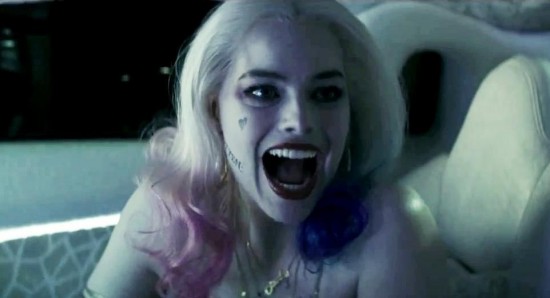
Last summer's release of Suicide Squad introduced the masses to Harley Quinn, the effervescent pig-tailed female counterpart to the Joker. Frankly, it's surprising anyone even vaguely familiar with Batman hasn't picked up her movie rights before now. Since her debut into the canon via the comics and The Animated Series, Harley has been an object of fascination among Batman fans and think-piece writers alike. As she should be, since she's a total peach. She's fun, spunky, and more than a little unhinged. She's got that adorable Brooklyn accent, fantastic fashion sense, sick gymnastics moves and a big ol' heart of gold. She's the patron saint of broken dolls, a funhouse Ophelia in clown makeup, an icon among misfits and self-professed psychopaths. Yet, despite everything there is to love about Harley (and there is a lot to love), the caveat is compromising her problematic relationship with the Joker.

It's no big secret that the Joker and Harley have a twisted relationship, though you wouldn't know that from DC's latest cinematic misfire. So much attention was focused on Harley during the marketing phase, it appeared that a great deal of the plot would revolve around her--and the Joker--which for me and many other people was the prime selling point. For all its hideousness, Harley's saga with the Joker is ripe for juicy plot development, and the promise of seeing her wreak a little havoc of her own was enough to get asses in seats. But that, like so many things in this movie, turned out to be a shallow grab for attention--if not for a pre-existing fanbase, then for the blatant sex appeal.

Strong Female Character alert!
The final product turned out to be less of a fun grimy shoot-em-up than just a mess of poor choices, with the highly advertised Harley Quinn stumbling along with the rest of the slapdash ensemble. The movie portrays Harley's complex psychological troubles as simply falling in with the wrong crowd due to a weakness for bad boys. Crippling co-dependence and deep seated trauma is replaced with "My bae is the greatest!" The least they could do was make her psychotic--which could still be poorly done but fun to watch--and they couldn't even manage that.

Thanks for the flashbacks to everyone I hated in high school.
But all of this I can forgive. After all, the movie on a whole isn't very good and many characters remain underdeveloped, if not fall off completely. For what it's worth, Margot Robbie is a talented enough actress that she's a joy to watch even when she's spouting this hot nonsense. What I take issue with is the film's portrayal of her relationship with the Joker.

In the comics and the cartoon show, Harley is a beautiful amalgamation of the Doormat and the Woman Scorned. Not only has the Joker systematically and repeatedly ruined Harley's life since the literal moment they met, but he's regularly hostile, manipulative, and dismissive of her, both emotionally and physically. Harley swallows this constant abuse and feeds it back into her crazy-cannon, attempting bigger heists and causing more destructive mayhem in order to appease her beloved. The few moments of mutual affection we see between them are so scarce that when you do see Joker give her a squeeze or a peck on the cheek, it actually seems sweet (if only because we've learned to brace ourselves for something awful). The times she's managed to get away somewhere safe, even prison, she's haunted by his memory, pining for him despite all his cruelty, only to sooner or later, fall right back into his arms.

This roller coaster of a relationship speaks to the nature of both these characters. The Joker is a sadistic sociopath, and Harley's a blend of romantic delusion, codependency and classic battered housewife. For him to be viciously cold and for her to be blindly devoted makes sense in context to one another. She unleashes her insanity on behalf of or in spite of him, and he reveals his own weaknesses when he inevitably comes back for her. Their individual personalities are more complex just for being together. Harley's ability to keep her bubbly disposition through it all is both an extreme portrayal of the abuse victim's need to keep a happy face, and her inescapable kinship to the Joker.

You get none of that here.

Ahahaha! You've never punched me once!
Suicide Squad is not quite the disgrace that reviews made it out to be, but its biggest flaw comes from trying to emulate other superhero movies. You can see shades of other films plastered all over this movie, from the disaster imagery of the latest Superman movies to the Avengers formula of a ragtag team squaring up against a vengeful god. For our reasons, let's turn our attention to Deadpool. The romantic subplot of that movie could have easily been a tasteless pull for the Valentine's Day crowd, but it turned out to be one of the more endearing aspects of the film. Wade's relationship with Vanessa feels sincere and heartfelt, thanks to Ryan Reynolds and Morena Baccarin's great chemistry, and what looks like very, very good sex. Their mutual damage is what brings them together, but it isn't all their relationship is about. You believe these two love each other and it makes Deadpool's mission all the more heartbreaking and worthwhile. What the creators of Suicide Squad took from that was the singularly lovely line "Your crazy matches my crazy!" and ran it into the fucking ground.

{Spoilers ahead for the theatrical cut}

Harley's much anticipated cinematic debut plays out like this: her origin story spirals breathlessly from a promising psychiatrist to a lovesick Joker devotee. With all the reverence of the sweetest seduction, she willingly succumbs to shock therapy and dives into a vat of chemicals, only to be rewarded with the honor of being the Clown Prince's girlfriend/star stripper/bargaining chip. Her role as his partner in crime is displaying herself as a sparkly ornament to dangle uselessly in front of clients while he handles the negotiations and trademark psycho freakouts. She spends her days in Belle Reve Prison practicing her aerial cage routine and cockteasing the guards. When the Squad hits the town, she serves as a series of ass shots, trailer lines and not much else. Occasionally, other characters will call her crazy to remind the audience that she is on this team because of her dangerous, unpredictable insanity.


Admittedly, she does get singularly featured in one of the better scenes in the film. A few henchmen take on Harley and her baseball bat in a glorious glass elevator fight, set brilliantly to K7 and the Swing Kids' "Come Baby Come," one of the few musical selections that isn't obnoxious and naturally isn't featured on the official soundtrack. This scene lasts less than two minutes.

It's revealed early on that Harley's just killing time before her Puddin' comes to pick her up, and several scenes of stealth-texting later, he finally sweeps her away in his super-sweet chaos helicopter. One abrupt explosion not even a full thirty seconds later, the Joker is presumed dead and she returns to the gang, because she literally has nothing else to do. She says the words "normal is a setting on the dryer" with such conviction, you can almost believe she didn't get that from a bumper sticker.

You could say she has a hand in saving the day in the end, but you should be embarrassed for bringing that up. The final scene shows Joker and his goons busting Harley out of prison. The lovers embrace as we smash cut to neon graffiti credits and Twenty-One Pilots attempts to drown out my screams. All of this garbage is prefaced with an introductory scene scored to the immortal girl-power classic, "You Don't Own Me."

Indeed.
Despite the adoring following she has gained over the years and the efforts of more than a few writers and artists, Harley Quinn is still known primarily as "the Joker's girlfriend." No matter how many times she changes her look or embarks on a solo adventure or links up with somebody way cooler and better for her (*cough*  Pam Isley *cough*), it will inevitably come back to her love for the Joker and all the trauma that comes with it. It's a real shame because Harley is a great character. We love her and we want her to succeed, but we so rarely get to see that happen when the Joker's around. He's the worst kind of ex and the deadliest bad habit, yet the idea persists that he is the most interesting thing about her.

If that's so, then fine! Make it interesting! Make it some twisted, bloody, vengeance-fueled I Spit on Your Grave shit! To quote my fiance, "Everyone would have loved a scene with her, the Joker, and her bigass hammer. 'You should have treated me better, Puddin!'" This movie had every chance to do that. If this relationship was so insistent on butting into the plot as often as it does, the least it could have done was give us some kind of complexity to the whole thing. Instead we just get vignettes of two crazy kids in love, the ultimate bad boy and his ride-or-die girl, ballroom dancing on the corpses of all the stupid normies, cackling as they fire their pearl-handled pimp pistols into the night. Because that's a much better message to send to all the disenfranchised youths!

His and hers!
The movie tries to have its cake and eat it too, having all the trappings of a dysfunctional relationship without any of the complexity. They chose not to portray Harley's insanity, and by extension all the icky issues that come with why she is insane, and thus they suck away any point to her being in the movie aside from how great she looks in sequined shorts.

Believe it or not, it's actually possible to portray two psychotic murderers with a love that's half affection, half insanity. In fact, it's already been done, in the unlikeliest of places. Picture it, in theaters everywhere October 1998, the resurrection of a monster by way of his devoted lover only for the two to go on a murderous spree, ultimately leading to their mutual destruction.

America's sweethearts!
The Child's Play series. It terrified all of us at least once, right? I've previously mentioned my earliest encounter with horror, going to the video store with my mom when I was seven only to run into Chucky's murder face propped up on the front counter. That single image burned so brightly in my nightmares for so long that I purposefully avoided the movie until my 20's (also steered clear of Spencer's Gifts around Halloween).

When I finally felt prepared to take on the series, I found the early films...fine. Brad Dourif is brilliant, the effects hold up for the most part, and the continuation of the story through Andy Barclay over the course of three consecutive movies is something sort of unique to most horror franchises. But on the other hand, the pacing is slow and the (child) actors are often hard to watch. Sweet relief comes when you see Chucky's tiny shoes scuttling along the floor, promising a few good kills and some enjoyable one liners, but they come and go too quickly before getting back to the molasses plot. You can get just as much out of the first Leprechaun movie.

I realize this is blasphemy in some circles, especially given what I'm about to follow up with. Bride and Seed of Chucky, the sequels the horror community has tried to forget since their premieres in 1998 and 2004, are my favorites of the series. Chucky is the best part of the movies, so it only makes sense to center the film around him instead of hiding him in an air vent. Even better? Pair him up with his old girlfriend, and cast the sexiest woman alive: Jennifer Tilly.

Also known as #3 on Rylee's Top Ten Movie Girlfriends.
Chucky's managed to resurrect himself out of a jam more than once before, but Bride takes a different route in bringing him back to life. Turns out Charles Lee Ray maintained a social life during his heyday, and his old flame Tiffany has finally come to claim her man. She rebuilds his ruined body out of the many doll parts she has collected over the years (talk about devotion--one wonders if she was into dollmaking before or after she heard about what became of Chucky in that toy store). Whipping up a little voodoo ceremony in her fabulous sparkle-goth trailer, she manages to wake her beloved's spirit and after so many years apart they can finally build a life together.

Tiff's joy is short-lived when she realizes Chucky isn't interested in settling down and enjoying the domestic life with her. He's eager to assume a new human form and get back to his old tricks. Her happy ending, so gleefully planned for so long, falls apart before her eyes as she realizes she's hooked up with the same old creep. She responds to this devastation by indulging a few brief tears before locking him a playpen and carrying on with her life being trailer park fabulous.

Tiffany is the kind of girl who has presumably suffered a lot of disappointments in her life, but she seems to know how to pick herself right back up onto her stilettos and keep moving, even if she has to dump a few corpses along the way. She's a "grow where you're planted" kind of gal. Even when Chucky does the unforgivable in removing Jennifer Tilly from her spectacular body (not to mention interrupting the best part of Bride of Frankenstein), she adapts to her new plasticine look quite easily while adding her own personal flair. My girl can make it anywhere, so long as she has a tube of black lipstick and a pack of smokes to get her through.


Tiffany is the perfect girlfriend and partner in crime for Chucky because her love for him doesn't make her blind to his faults. She calls him on his shit, and she's willing to retaliate, often brutally. Mutter something disrespectful, prepare for a doubly poisonous comment right back. Insult her cooking, be sure to duck for that plate sailing for your head. Chucky is the wisecracking ham, always quick with the joke or sneaking in the last word, but Tiffany is actually up to the challenge of trading barbs with him. Not to mention, trading blows.

She is just as much of a killer as he is, sometimes even more devious and creative than he could hope to be ("What would Martha Stewart do? Improvise!"), often outdoing his stunts on tenacity alone. Bride ultimately ends with Chucky being shot by the good guys, but not before a passionate showdown with Tiffany wielding a shovel twice her size. She even has the honor of (literally) delivering the last scare of the movie, bursting to screeching life as she births a monstrous baby in a final shot that gloriously sets up the next film.

Seed of Chucky spends even more time getting to know the dolls as Chucky and Tiffany come back to life once again to meet their child, a gender-confused sweetheart they dub Glen/Glenda (Billy Boyd). We hang out with the happy family in their downtime between stabbings and voodoo plots and this is where the film shines--we get to see Chucky indulge in his softer side and wonder at his potential to raise a protege, while Tiffany revisits her affection for glamour and her set-aside homemaker dreams. She is delighted to wake up in Hollywood and positively star-struck when she realizes she's in the presence of the actual Jennifer Tilly. (The idea of the actress Jennifer Tilly playing herself while sharing scenes with a character voiced by Jennifer Tilly may be crossing some unspoken line in meta humor, but I find it adorable.) A glimpse of a better life and the chance to have a family serves as a wake up call, and Tiffany vows to "sober up" for the sake of her daughter/son. Her honest try at living clean quickly breaks with Redman's steaming guts spilling out onto the real Jennifer Tilly's nice hardwood floors.

To be fair, he was a kind of a dick.
All this violence certainly doesn't suck the romance out of the relationship. Despite their differences, Chucky and Tiffany genuinely enjoy each other's company and make a very effective team, both on and off killing sprees. Their fights, despite their volume and viciousness, are often quickly resolved, and even when they catch each other in a lie, they can still understand and empathize with each other. Even the sex is great, plastic parts and all. "Your crazy matches my crazy" actually applies here in the most wonderfully demented way. Given the right circumstances the two of them could settle down in a nice playhouse somewhere. But then again, we all know as well as Tiff that Chucky will never be husband material.

It has done wonders for his self-esteem.
It is at this point--when Chucky in no uncertain terms declares himself murderous bachelor for life--that their relationship reaches its most interesting and most tragic peak. Tiffany knows Chucky is a virus upon the world, and despite all her love for him, in that moment she realizes she can never tame him. Therefore, he must be destroyed. (It's arguably the same revelation she had in Bride but then again, if we didn't all give our shitty exes a second chance now and then, we wouldn't have sequels.) She and Glen/Glenda kill Chucky and chop his body into pieces, ensuring he won't be coming back any time soon, and start their lives again in new bodies.

I feel Tiffany gets the only true happy ending in the entire franchise, easily acclimating to the life she always deserved: living as Hollywood superstar Jennifer Tilly with her adorable twins, Glen and Glenda. Sure, Chucky's still out there and he's probably coming for them once he can get all his parts stitched back together, but for now they have their squeaky clean celebrity life in a beautiful home with bizarre family secrets kept tightly under wraps. And, knowing Tiffany, when the time comes, she'll be able to hold her own. After all, she doesn't mind a little bloodshed getting in her sunshine now and then.

In another world, we would get a Harley/Joker movie with a deliciously twisted dynamic more like Chucky and Tiffany's, with all the darkness and humor and romance and countless other shenanigans that any relationship between two fictional psychopaths deserves. Sadly, the most disliked Child's Play sequels may be the closest we ever get to seeing that kind of relationship onscreen. For now, we can at least take comfort in the fact that this is merely the beginning of Harley in the movies, and lord knows we can only go up from here.

Ahahahaha not likely!

Saturday, March 25, 2017

Period Pieces -- Movies to Watch When You're on the Rag

(Disclaimer: The following contains candid references to menstruation.)

It's that time of the month, ladies! I'm talking cramps, bloating, mood swings! I'm talking a typhoon of hormones and phantom baby rage let loose upon your uterus, with your own personal crime scene to admire every time you go to the bathroom! That's right, it's your period, and it's happy to see ya!


Despite the week-long maelstrom they bring with them, periods really are an amazing phenomenon. It's our uniquely feminine connection to the earth, the will of the tides, the waning of the moon. Even in such an unpleasant state, I can't help but get a sense of my feminine energy being recharged, this pain representing a sort of rebirth. My time of the month is when I feel most female, and that in itself is a beautiful thing.

All that being said, it still really fucking sucks. For me, the first day is always the worst. It's like a vampire is literally draining me dry from my most vulnerable place, taking all my energy with it. All I'm good for that horrible first day is curling up with a heating pad and watching some movies. And since I tend to watch stuff that fits my mood, this monthly celebration of womanhood deserves female-driven films dripping with blood. Here are some of my recommendations for your next camp out in the Red Tent.


CARRIE
The pinnacle of all period movies, Stephen King's Carrie as imagined by Brian de Palma is an absolute classic. But that's not the one I'm talking about. I love it to pieces, but it also makes me cry, and given my delicate state, I'm especially vulnerable to such emotional outbursts. So how do I enjoy the ultimate menstrual movie without weeping? Simply pop in the 2002 made-for-television remake and get ready to have some fun! This movie jazzes up Carrie's powers with bad CGI, beating the 2013 movie to the punch, and threw in a modern touch and a few jokes for extra flavor. The result still doesn't hold a candle to de Palma's masterpiece, but it's more like the Lifetime version of Carrie, cranking up the melodrama and tasking pretty good actors with terrible dialogue. Angela Bettis (May, The Woman) makes a fantastic Carrie, playing it as a true weirdo outcast, all wild hair and jittery meltdowns. Margaret White as portrayed by Patricia Clarkson (The Green Mile, Easy A) is somehow more chilling than ever, all soft soothing tones as she recites archaic verses before throwing a sudden cold slap to the face--plus the horrified way she says "Internet!" is truly priceless. Add appearances by horror alums Jodelle Ferland (Silent Hill) as a young Carrie and Katherine Isabelle (Ginger Snaps, American Mary) as one of the mean girls, and you've got yourself a fine addition to the long line of King adaptations that tried to be truer to the book and ended up forgotten by everyone but thinkpiece writers who grew up with cable.


GINGER SNAPS
Let's see how Katherine Isabelle likes it when she gets a period! Another great film where the plot is kicked off by someone's first blood, Ginger Snaps takes the idea of menstruation and blossoming womanhood and turns it rabid. I don't know anyone who enjoys getting their period, but I certainly didn't know anyone in school who never wanted one in the first place. It's a rite of passage, a sign of growing up, and something every girl wants to experience at some point. From Ginger and Bridget's point of view, becoming a woman and becoming a monster are one and the same. Neither of them intend to grow up, or at least go anywhere the other won't follow. When Ginger is bitten by a werewolf on the eve of her first period and has no choice but to become both, the true horror emerges from how much she likes it. She's suddenly more interested in boys than having suicide photoshoots with her sister. She relishes the power that comes with this body, but when it begins to turn on her, she is powerless to stop it. You could pick apart the parallels between lycanthropy and femininity all day, from a body charged by the moon to a hunger for sex that borders on bloodlust. Ginger Snaps pulls all the humor and tragedy of The Curse together into one sweet package.


TEETH
I think every girl has felt the storm brewing inside her once a month and wondered what her ladybits could be capable of if given the right tools to lash out. Teeth takes a legend as old as time and puts it in the modern day, hilariously bestowing vagina dentata upon a young abstinence advocate. This is another about the geyser of complications that comes with budding womanhood, most of it stemming from the chaos going on in your nethers. Teeth beautifully renders one of the more delicate horrors of being a teenage girl, especially growing up with a Christian identity. You aspire to purity and marriage while the motives of the mystery in your pants invades your every other thought, and should you choose to act on those desires, you face a multitude of risks even more severe than sinner's guilt. Dawn (Jess Weixler) has one of the most satisfying arcs I've seen in a horror film--starting out as a timid girl afraid of the potential of her own body, coming away at the end transformed into a liberated, powerful praying mantis of a woman with one hell of a secret weapon.


EXCISION
What woman hasn't discovered an especially gnarly glob of raspberry jam in her panties and taken a second to marvel at the repulsive wonders of the human body? A polar opposite to the protagonist of Teeth, Pauline (AnnaLynne McCord) is fascinated by her own body, right down to the gory details. One of the unsung heroines of feminist horror, Pauline makes every effort to reject any hint of traditional femininity. She's enamored with blood, purposefully unkempt and gleefully crass, most of her antics in direct rebellion against her prim mother (Traci Lords). When she decides to lose her virginity, she marches right up to her chosen mate and bluntly declares her intentions. What she doesn't mention is that she's scheduled their hookup during the heaviest day of her flow. The tryst that follows is a highlight in a film that's stuffed with amazing moments, cutting between the blood-soaked passion pit in Pauline's head and the squelchy reality in a dingy motel room. The disgusting delights of this film only escalate from there. In an industry that's lousy with flawless hotties being hot for hotness' sake, it's so refreshing to have a female protagonist that is just a powerhouse of gross and flaunts it shamelessly. For once, the outcast girl is not the shrinking violet in need of some gentle soul to notice her, but instead a sexually-charged psychopath who dreams in giallo gore. Definitely the kind of girl I can get behind when I'm feeling a weird mix of profoundly unattractive, inexplicably horny and capable of terrible things.


JENNIFER'S BODY
Ever get to a point in your cycle where you just want to rip a man apart based on the simple truth that he doesn't have to deal with this shit? And does that thought lead to remembering all the other things men don't have to deal with, like catcalls and bra shopping and sneezing right after applying mascara and systematic oppression dating back to time immemorial and suddenly you find yourself staring daggers at your fiance and digging your fingernails into your thigh to keep from scratching his eyes out? Or is that just me? Anyway, Jennifer's Body is a great way to take that fantasy for a walk and have a few laughs along the way. Jennifer (Megan Fox) is the girl we all hated in high school, outrageously beautiful with her pick of any boy she lays her sultry blue eyes upon, her seductive ways hiding a fragile ego and girlish naivete. When a satanic ritual goes sour because she lies about being a virgin, Jennifer develops demonic powers and starts feeding on local boys, working her way toward the one thing she could never have: her best friend's boyfriend. Jennifer's Body has some interesting things to say about the more poisonous aspects of female friendship, despite a few kinks in the flow (I'm looking at you, girl on girl makeout scene that was only included for the misleading trailers and you know it), but like Ginger Snaps it speaks to the little ways girls can grow apart as they grow up, sometimes over something as petty as our own insecurities. At the end of the day, it's just so much fun to watch lovely Megan Fox unhinge her jaw and slurp up boy blood, and it's a lot healthier than taking out those jolts of misandry on the men in your life.


THE DESCENT
Six women go spelunking into an uncharted cave full of dead ends, tight tunnels, deep pools, and unknowable darkness. If you've studied your literary analysis, you'll recognize this as six characters in search of an exit from a giant vagina. (The sheer imagery of the blood swamp at the climax is enough to give any menstrual girl a nagging sense of deja vu.) Make those characters kick ass women--each with a well established personality and active purpose among the group as well as driving motivation based on interpersonal relationships with one another as well as survival--and you really can't get much more girl power than that. Throw some mole people into an already harrowing situation and we've got a wild ride ahead. This film is so intense and definitely the biggest downer of the list, but it's hard not to get jazzed up watching these women dangle over chasms by their bare hands and wriggle through tunnels with little more than a "woohoo!" once they get to the other side. It's not many horror movies that can claim to be more terrifying before the monsters show up, but The Descent understands that the true horrors come from what you bring with you down into the cave. (That's another vagina metaphor for you.)


DUMPLINGS
With all the age-reversal pills and potions on any given skin care aisle, it's enough to drive any woman insane searching for the ultimate product that would return everything she has lost between the lines on her face. It's hard to shake the feeling that maybe the answer lies in a more ancient, infinitely more barbaric solution. Effortlessly cool spinster Aunt Mei (Bai Ling) has a business selling homemade dumplings guaranteed to restore beauty and vitality to the women who eat them. The only catch is that the secret ingredient is a bit hard to come by...aborted fetuses don't just grow on trees. When one of her customers, Mrs. Li (Miriam Yeung), craves a stronger product, Mei tells her the only solution is a rarer variety of meat--one that comes at an unspeakable cost. Dumplings examines the roles women are expected to fill--to be beautiful and to bear children--and wonders what happens when a woman chooses priority of one over the other, and what she would do to keep what she has worked so hard to claim. Feminine fears are in injected into every frame of the film, from the paranoid suspicion of a husband's infidelity, to the profound horror of realizing that you are the source of that strong fishy smell wafting through the room. Plus it's hard not to notice the delicious imagery of fetuses being re-purposed as filling for suggestively shaped pillows of dough. Whether you choose to watch the original short included in Three...Extremes (which I recommend) or the full-length film, this movie is a deliciously uncomfortable journey through the body when we see it as magic, a vessel charged by the power we feed to it.


So how ya doing, champ? Has the storm subsided, or does it still feel like goblins are chasing cave divers through your guts? Pop another Midol and take a hot bath, you beautiful menstrual monster, and never be ashamed of what you're going through. We may not be able to discuss Shark Week at the water cooler, but we can at least feel that female power and inherent understanding through the movies, the bloodier the better. Never forget the ancient power given to you, how it has frightened and fascinated men across the ages, and always remember that if you can withstand this torment from within, you can face anything waiting for you out there. Solidarity, my sisters! Let us not bleed alone!

Wednesday, November 16, 2016

"The secret lore of the ocean" -- Japan and the Mysterious Sea

 "We are tied to the ocean. And when we go back to the sea, we are going back from whence we came." -- John F. Kennedy

My relationship with the ocean is complicated. I was born on the California coastline, and as far back as I can remember, many of my interests revolved around the water. Whenever I go to the beach, I feel tremendous peace, a return to my truest self. It's a long salty drink for my parched spirit and it's the best medicine I know. At the same time, my deepest fears lie in the ocean. Sharks are at the top of the list, that goes without saying, but it's the water itself more than anything, that vast empty space. The possibilities it holds, all that life hiding in silent, endless blue.

Just the thought of swimming in open water makes my blood run cold. I've always wanted to take SCUBA lessons but I'm certain I would suffer a fatal heart attack from sheer panic on the first dive. Even a nice whale-watching boat tour is out of the question because I know that any shadow quickly rising from beneath would send me into hysterics. And rest assured, this is not because I am ignorant--it's because I know too much. I know what's down there, and I know what could be down there, and I know that I am a member of a species that is ill-equipped to deal with any of it, so I know exactly enough to not go in.

C'mon, man! Cannonball!
Like a lot of questionable things about me, Japan gets it. Ayakashi loosely translates to "strange phenomenon of the sea," specifically entities that cross boundaries between water and land, whether that means a sea serpent being spotted breaching the waves, ghosts haunting the deck of a ship, or a full on beach-invasion of mutated crabs. The most obvious example of this reflected in pop culture is Gojira, the leviathan that rises from the sea and wreaks havoc on land. Most analysis agrees that Gojira represents Japan's fears over nuclear war and radioactivity, but for my money, it just as much represents fear of the immeasurable, unknowable secrets of the sea. Japan's relationship with the ocean goes deeper (pun intended) than the guy stomping around in a dinosaur suit would have you believe.

No one can illustrate Japan's itchiest anxieties better than Junji Ito. I discovered his brilliantly weird manga series Uzumaki only last year, and since then I have gobbled up whatever of his work I can find. Uzumaki tells the story of a small town that slowly becomes consumed with spirals, the pattern appearing everywhere from smoke to locks of hair to birthmarks. This doesn't sound like much, until people start twisting themselves into human curly fries and teenage boys slowly morph into enormous snails. Ito's combination of bizarro plot, bleak characters, and absolutely insane artwork create a dizzying experience of horror. In 2001, he unleashed arguably his most notorious work upon Japan, Gyo, first running as a serial manga before being adapted to bound collections. One day, fish bearing spindly terror-legs begin crawling up on land and chaos ensues. The overall plot consists of government conspiracy and biological warfare gone awry, mixed with family secrets and a little strained romance to spare. But the reason you may have heard of Gyo comes down to one nightmarish image: shark with legs.

Where's your god now?


Our Americanized introduction to the wonderful world of J-Horror arrived soaking wet. The American remake of The Ring has water all over the place, from Seattle's never-ending rainfall to a dreary ferry boat ride. The cursed video depicts a woman flinging herself into the ocean and dead horses in the surf. Samara herself is surrounded by water imagery, bringing the dank darkness of the well with her wherever she appears and dripping it all over your clean floors. The apartment in Dark Water is haunted with wetness, from the stains oozing through the ceiling to the grimy sludge that pours from the faucets. The story takes some inspiration from the bizarre details of the Elisa Lam case, wherein a hotel suffered plumbing issues that were later discovered to be caused by the corpse of a young woman stuffed in the building's water tower. The Grudge was less fixated on water imagery, but one of the tensest scenes depicted a detective reaching into a full bath of inky water, discovering through a psychic glimpse that a young boy and his cat were drowned in the tub.

Many of Japan's myths and legends are directly linked to water. The kappa is one of the more distinctive and well-known Japanese water spirits. They are described as wily ogres that dwell in rivers and lakes, causing trouble for unwary humans that stumble upon their turf, from drowning, to rape, to extracting your soul through your butthole (seriously). The Shinto figure Suijin (meaning "water deity" but also applied to any number of supernatural creatures that inhabit the water) accounts for a sizable portion of Shinto worship, the water god representing clean drinking water, healthy pregnancies, and providing protection for fisherman. Even the Shinto version of the creation myth includes a crucial reference to water: the god Izanagi arrived on Earth and refreshed himself with a soothing bath, like you do. As he toweled off afterward, each drop of water that fell from his body and hit the soil formed into a newborn yokai (mysterious phenomena), bizarre spirits and creatures that went on to wreak havoc on the world. 

Some of these apparitions seem terrifying in appearance and actions, but are often embarrassingly easy to outwit. Legends of drowned sailors known as funa yurei rising from the sea and dragging ships below the surface is a classic image of maritime horror. The ghosts will demand a bamboo spoon from the terrified crew, only to use the spoon to fill the boat with water; therefore, it was deemed wise for a captain to pack a spoon with holes drilled in it, so as to fool the spirits. Even the murderous kappa have a two glaring weaknesses: they have a bowl-like dent on top of their head that must remain filled with water, and they are polite to a fault. If one can trick a kappa into returning a customary bow of greeting, its bowl-head will spill over and the beast will be forced to remain half-bowed until he can refill himself, allowing the human to escape.

Perhaps the most mortally horrifying of these spirits, for me anyway, is Umibozu, or "sea monk." Storms are obviously bad news for sailors, but when the skies are clear and the water is still, that is the time to be truly afraid. Umibozu are artistically portrayed as dark giants with luminous eyes that rise suddenly from the depths of calm seas and loom over passing ships, if not sucking them into the swell of their arrival. Sometimes they ask questions, more often they cause destruction, but they always leave witnesses in pants-shitting hysterics.

Hey buddy.

They were said to warn of coming storms, but there are disturbingly few concrete reasons for encountering umibozu. In fact, I couldn't find any information on how to attract it (should you want to) or how to avoid it (should it find you), almost as if it is a true force of nature, as random and unfeeling in its punishments as the sea itself. Of course, this phenomena of enormous shapes rising from the depths has been promptly dismissed by science. Clearly, ancient mariners mistook the reflection of thunderheads or a large turtle for a towering harbinger of doom. I don't buy it. Even with only a handful of information on these entities, I know exactly enough to never get on a fishing boat again.

The most fascinating of the culture's roots in water lies in the existence of whale cults in the coastal regions. I'm sure some of you out there can't think of marine mammals and Japan without instantly jumping to The Cove, but I would like to do my part to remind you that film does not depict Japan's environmentalist attitude as a whole, only an ostensibly ugly aspect of its fishing industry (at least to us Westerners, and we're not in any position to judge). But Japan's niche religion of whale worship has a long history rooted in folklore, none as striking and haunting as the legend of Bakekujira, the Ghost Whale.

The most metal god in all creation.
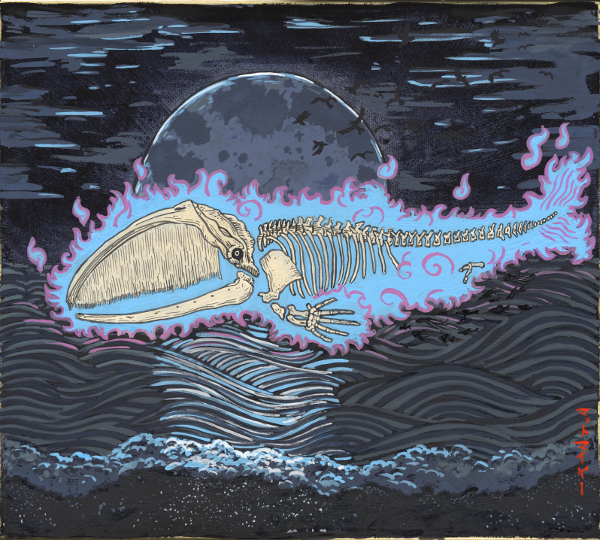


One night long ago, off the coast of Okino Island, something huge and white came rolling in with the tide. When boats went out to investigate, they were astonished to see the living skeleton of a baleen whale, surrounded by a massive school of squirming fish. The men attempted to harpoon the beast only for their spears to fly right through it. The apparition lingered for a while only to eventually vanish without a trace beneath the waves.

It's fairly common for whales to follow their prey into dangerously shallow territory, accidentally beaching themselves in the process. But nature does not act without reason, at least not to those who are paying attention. Stories referring to Hyochakushin (the "Drifting Ashore" god) nearly mirror the legend of Bakekujira, but take a more literal form. Before the revolution of the sea-faring vessel, coastal Japanese villages were limited in how much bounty they could take from the ocean, their rowboats unable to travel too far away from shore. These villages would struggle to survive on their small fishing hauls and meager harvests on land. But every once in a while, fortune would smile upon them.

The arrival of a whale on the beach was an enormous blessing, bringing with it scores of deep sea fish. A village could eat for weeks on fish and whale meat and they didn't let a scrap of it go to waste. The villagers believed the whale was not only a gift from the gods but also a god itself, a massive noble creature that arrived in their hour of need, and they would not allow the sacrifice go unnoticed. Shrines made of whale bones were erected to honor the creatures, and to this day there are over 100 whale graveyards scattered over Japan. The whale god eventually blended into the lore of the Shinto god of abundance, Ebisu, as a bringer of good fortune and mortal comforts, establishing whales forever as benevolent rulers of the sea.

So what does all this mean? It's probably not for a white American to properly explain or even hope to truly understand, so I won't try. But I do find it inherently fascinating how a culture shapes itself, what geographical and psychological factors combine to produce such vivid mythologies, which in turn influence the modern culture. And given my own quasi-phobia of the deep, it's difficult for me not to be intrigued by the pattern.

I don't know for sure if the nation of Japan is subconsciously terrified of the ocean, if a citizen of modern day Sapporo looks out at that endless green sea and can't help but feel admiration mixed with some unknowable dread, some deep-seated fear that they've known their whole life but never really understood, sure that at any moment something monstrous could rise from the depths. But it's plain to see that many of their stories and legends have a common theme, and it's hard to dismiss that it is merely an influence of geography. There is true fear there, the truly alien, still the greatest mystery our planet holds. In any case, these stories have pumped up my anxieties of the ocean better than Jaws ever could.

Have you heard the good news about our lord and savior NO ONE?

(The information on Japanese legends sourced from https://hyakumonogatari.com/tag/water-monsters/ which is highly recommended reading if you're even half as interested in folklore as I am.)